Mayo Clinic researchers are developing an early warning system that can detect airborne viruses, bacteria, fungi, and allergens in real time, potentially transforming how indoor spaces are monitored for biological threats.
Plumbing on a Chip
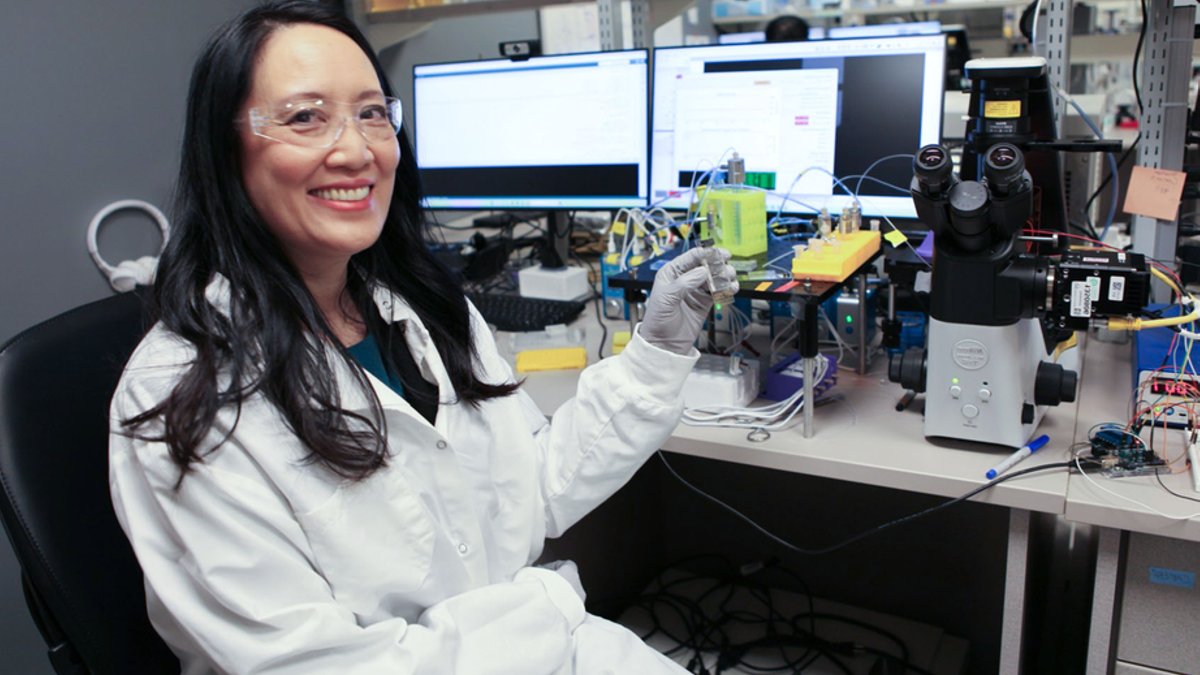
Dr. Connie Chang, a biomedical engineer at Mayo Clinic, holds up a small, clear chip covered in microscopic channels. These channels act like tiny pipes, guiding liquid samples containing captured airborne particles into chambers for analysis. “Plumbing on a chip,” she calls it, noting how the miniaturized design allows for precise control over each sample.
The chip is part of a larger biosensor designed to continuously monitor indoor air quality. Since people spend roughly 90% of their time indoors, Chang emphasizes the need for tools that can identify what’s circulating in the air around them. “If we can actually collect them and detect what is in them, we can alert and protect people who might be in that space,” she says.
Real-Time Detection Goals
The system aims to detect up to 100 biological targets simultaneously, including influenza, RSV, tuberculosis, mold, and common allergens. Inside the chip, liquid samples break into thousands of microscopic droplets, each serving as an individual test. When a droplet contains a target, it lights up while others remain dark.
“If a new virus outbreak occurred, as long as we knew the gene sequence, we could very rapidly adapt our system to detect that virus,” Dr. Chang says. The work builds on years she has spent developing microfluidic tools to study viruses and bacteria at the level of individual particles and cells.
Bridging Speed and Accuracy
Traditional methods often require air samples to be sent to labs, delaying results by hours or days. In contrast, the Mayo Clinic team is working toward a system that delivers fresh readings every 45 minutes. This speed is critical in settings like hospitals, where vulnerable patients are at high risk of infection. Faster results could give care teams more time to respond, adjust ventilation, or take additional precautions for immunocompromised patients.
“Knowing results right then and there could reduce the number of people getting sick within these spaces,” Chang notes. Researchers envision deploying the technology in nurses’ stations, patient rooms, and emergency department waiting areas—places where people share air and vulnerable patients may be nearby. The same approach could eventually extend to schools, day cares, and other shared indoor spaces.
AI Integration and Future Vision
Building the system requires expertise well beyond Dr. Chang’s lab, drawing on Mayo Clinic specialists in biomedical engineering, infectious diseases, emergency medicine, and population science, along with university and industry collaborators. The idea is a familiar one: Smoke detectors warn of smoke, carbon monoxide detectors alert people to dangerous gas, and thermostats track temperature. What no device in the room can currently do is tell people what they are breathing.
The researchers are also exploring artificial intelligence to help interpret biosensor readings alongside information about airflow and room occupancy. This could enable automatic adjustments to air filtration when risks are detected, aligning with a broader shift toward smarter hospital environments. As part of its Bold. Forward. initiative, Mayo Clinic is designing future care spaces with technologies that monitor vital signs, enhance safety, and adapt room conditions, including air quality, to protect patients and caregivers.
Mayo Clinic: Dr. Connie Chang discusses the biosensor in a video interview conducted by Kevin Sullivan, available for download in broadcast quality (2:33) at the end of this post. Journalists should credit “Mayo Clinic News Network.” A full script accompanies the footage.