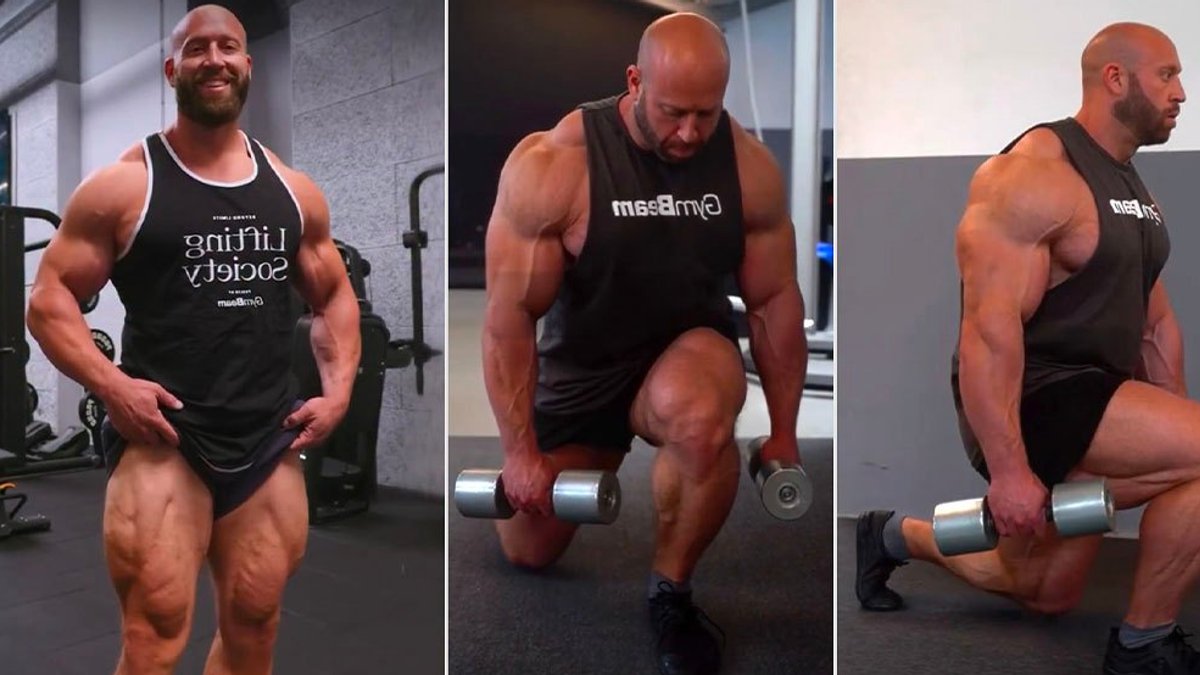
Forward and reverse lunges both build leg and core strength, but they emphasize different muscle groups in distinct ways that influence training outcomes. A recent Instagram post by Petar Klancir, an IFBB professional and transformation specialist, illustrated how each variation alters muscle activation while preserving the efficiency of compound movements.
Forward lunges place greater demand on the quads because stepping forward forces them to absorb impact and control the descent. The deeper knee bend in this movement increases stress on the front leg, requiring careful management of body weight through each repetition. Klancir pointed out that proper technique involves gradual lowering and lifting phases to maintain stability.
Reverse lunges, however, direct more attention to the glutes and hamstrings through a hip-driven motion. Since the front foot stays fixed, the exercise reduces core engagement and knee strain. Beginners often find this variation easier to perform because the rear leg’s load relies less on quad strength, allowing for better balance.
Read Also: Scott Eastwood Evolves His Fitness Approach
Klancir’s demonstration revealed that forward lunges require precise foot positioning to prevent excessive knee stress, while reverse lunges benefit from keeping the front knee aligned directly over the ankle. Neither exercise should sacrifice depth or control, even when increasing weight.
Leg programs that alternate between both variations help balance muscle development while reducing repetitive strain risks. For muscle growth, lifters can incorporate dumbbells after mastering the basic movements, though maintaining proper form remains essential.