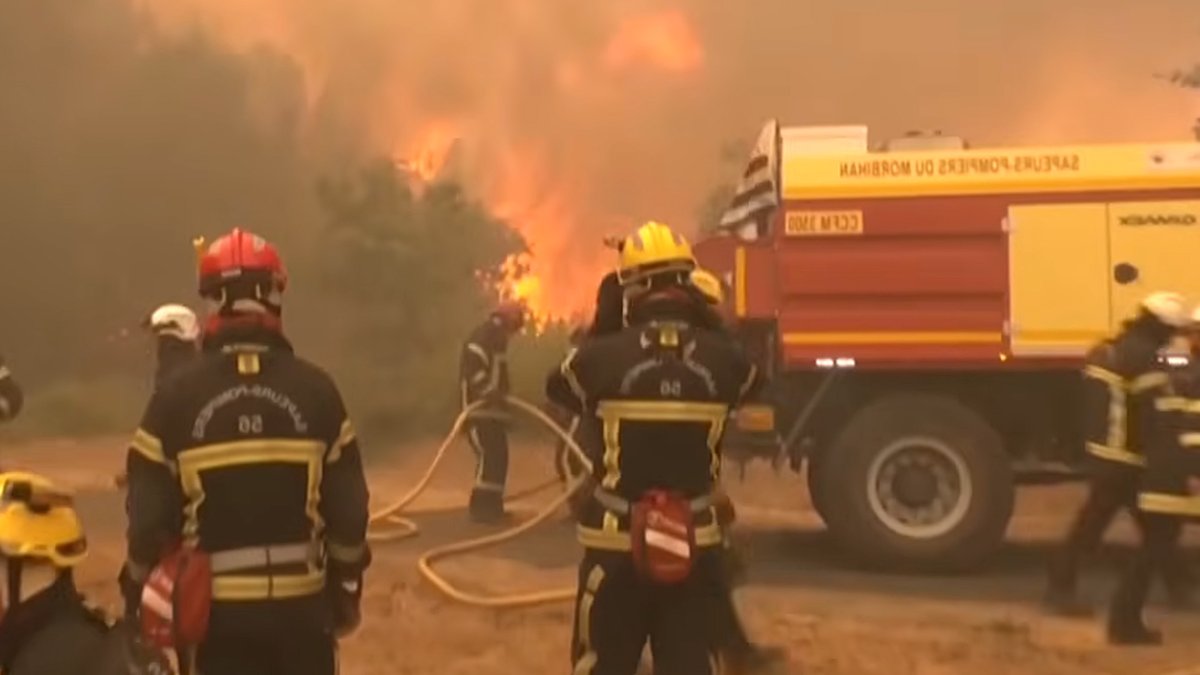
Wildfires are ravaging France and Spain, forcing hundreds of thousands to flee as the blazes intensify. The fires, described as “unprecedented” by French President Emmanuel Macron, have already burned 40% more land in France than the previous record year.
Fires break records as heatwaves push Europe to the limit
Joint statements from the UK with France and Spain framed the crisis as a direct threat to stability, energy security, and public health. The UK-France declaration called the fires a consequence of the global climate crisis, while the UK-Spain agreement stated that “this summer’s wildfires demonstrated that climate change was now a national security emergency facing Europe and threatening our way of life.” Both documents stressed the need to reduce fossil fuel dependence.
In southwestern France and Spain, at least three people have died, including two firefighters. Over 250,000 residents were evacuated, and entire neighborhoods turned to ash. A Spanish firefighter told reporters the blazes were nearly impossible to control. “The fire is so virulent and has such power that no matter what you do, you can’t stop it,” they said.
A blaze near Bordeaux generated a pyrocumulonimbus cloud—a fire thunderstorm—marking the first such event recorded in France. These storms create their own weather, fueling the flames and making firefighting harder.
Researchers from the University of Tasmania—Professor David Bowman, Dr. Calum Cunningham, and Dr. Grant Williamson—studied the fires and found their scale exceeds expectations. Their work had anticipated higher fire risk in the Mediterranean but not along France’s Atlantic coast. “No country has yet solved the challenge of responding to wildfires made worse by climate change,” they wrote. “The intense fires gripping France and Spain show how urgent it is to be prepared.”
Related: Wisconsin Voters Begin Casting Ballots in Chaotic Governor Race
The fires follow months of extreme heat and drought. June temperatures were 4–5°C above the long-term average, shattering historical records.
While the exact causes remain unclear, densely populated areas often serve as ignition points. Cigarettes, lightning, vehicle sparks, or arson can all start blazes. Authorities say preventing ignitions during extreme conditions is nearly impossible, though reducing fuel loads through controlled burns may help.
If trends continue, the researchers warned, forests that once absorbed carbon could start releasing it. That change would speed up climate change, creating a harmful cycle. “Intensifying fires make it harder to address climate issues,” they said. “Forests are key carbon stores, but some are now becoming sources instead.”
Adaptation strategies like prescribed burning and urban firebreaks will be essential for resilience. The situation in France and Spain highlights the need for better preparation.
Smoke and evacuations take a heavy toll
The human impact is severe. Millions have been exposed to dangerous smoke, which worsens respiratory and heart problems. Studies link large wildfires to higher hospital visits and increased deaths.
Related: David Jonsson to play new Black Panther
Evacuations save lives but leave homes unprotected. Without residents or firefighters on-site, structures burn more easily. The full property damage remains unknown, though the fires’ scale suggests major losses.
Wildfires are also breaking records in Canada and the United States this year. Fires have even appeared in places like Scotland and Greenland, where they were once rare. This matches predictions that climate change would expand fire-prone areas.
For now, authorities are working to contain the blazes before another heatwave hits later this week. Firefighters call the conditions some of the toughest they’ve faced. One said, “No matter what you do, you can’t stop it.”
As the crisis unfolds, public health responses face new challenges under extreme conditions.