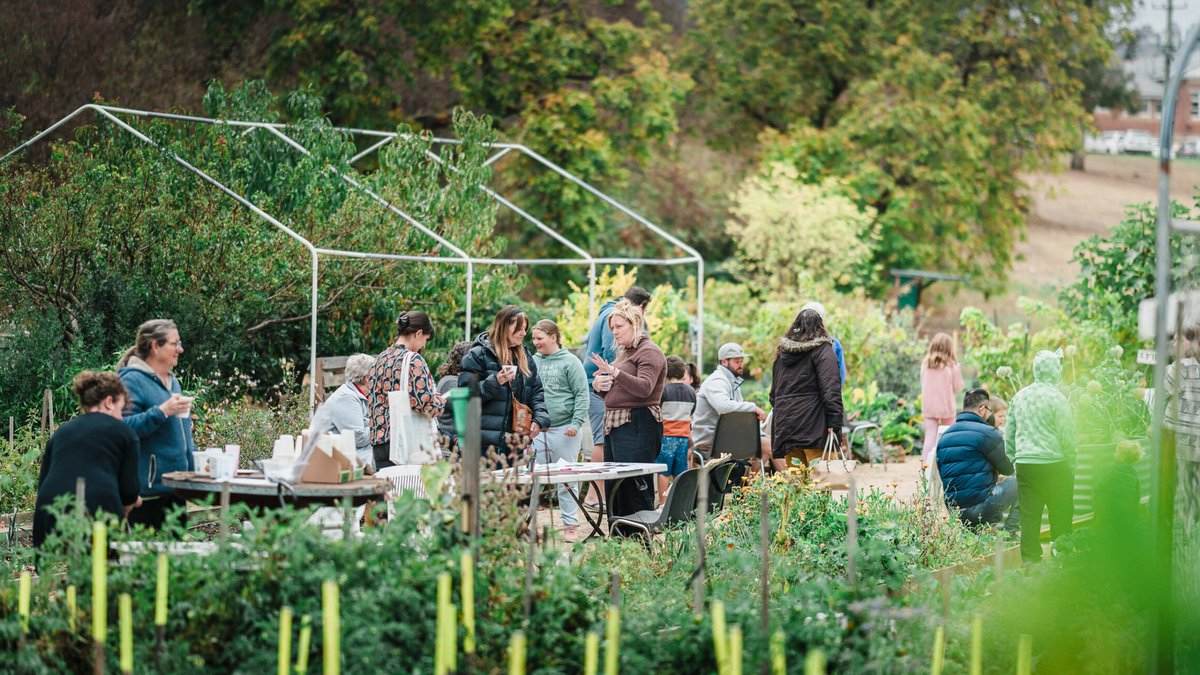
For people with dementia, connecting with nature can be powerful therapy, according to a collaborative research project in lutruwita/Tasmania. The project, led by the Venture Out Living Lab at the Wicking Dementia Research and Education Centre, aims to improve wellbeing and quality of life for people with dementia through nature connection.
With around 425,000 people currently living with dementia in Australia, and numbers steadily increasing, nature connection offers all individuals an opportunity for improved quality of life and participation in meaningful and enjoyable activities.
Nature Hubs
Located in a variety of community green spaces, ‘Nature Hubs’ are outdoor environments where people can connect with nature and each other. Three pilot Nature Hubs are offering both structured and unstructured activities to help people connect to nature, with the aim of increasing wellbeing, quality of life and reducing social isolation.
One Nature Hub has regular nature-based art activities whilst another has self-guided dementia-friendly walking trails. All Hubs aim to be dementia-inclusive; for example, with wayfinding signage, seating, sensory prompts to touch and smell different plants or opportunities to sit quietly and listen and observe nature.
The Derwent Valley Nature Hub, at the Derwent Valley Community Gardens in New Norfolk, is one of the pilot sites. Here the garden is always open to the public, so people with dementia and care-partners can access the space at any time.
Community of practice
Researching the impacts of nature participation has been a key focus of the Venture Out Living Lab. The Venture Out Living Lab was formed in 2023 by a team of dementia studies researchers and passionate community members and advocates.
Related: Medical leaders explore AI and bold leadership shifts
The Community of Practice includes members from local councils, neighbourhood houses, nature-based organisations, dementia support organisations and advocacy groups.
Guided by principles of dementia-inclusivity, the Nature Hub sites undergo dementia-inclusive training, site assessment and modification, and support from the research team to develop plans to support nature connections for people with dementia and their care-partners.
Nature matters
People living with dementia can often become increasingly isolated from others, as well as the natural environment. Outdoor and natural spaces that were once important in a person’s life can become increasingly more difficult to get to, but increasingly more important.
As one care-partner whose parent has dementia told us: “It’s nice to have a place where she’ll jump out of the car, and she’ll want to be in that space, that’s really important. And I love that I can come through it … I love that connection with nature. “When you’re caring for someone, you do become a bit insular, and it gives me an opportunity as a carer as well to communicate with other people and get a bit of social interaction as well. It’s very good for my health as well as hers.”
Research suggests connecting with nature can change this situation for people living with dementia. Benefits include improved physical, psychological, emotional, spiritual and cognitive wellbeing.
We acknowledge that First Nations people have long communicated the importance of connection with nature and Country for health and social and emotional wellbeing, and that non-Indigenous Australians have much to learn from Indigenous people about nature, health and wellbeing.
Related: US to resume Mexican cattle imports in August
Dignity of risk
The concept of the Dignity of Risk is embedded into practice.
Through research, partnerships and co-design work within communities, the Venture Out Living Lab will continue to build and grow the Nature Hub model and adapt it to meet diverse needs and interests of people.
The Living Lab will continue to source funding for research and work with partner organisations to expand the model as an effective, adaptable way of improving the health, wellbeing and quality of life of people living with dementia and their care-partners.
They will likely need to adapt the Nature Hub model to accommodate the diverse needs and interests of people with dementia, and this process will require ongoing collaboration with care-partners, community members, and healthcare professionals.
The Venture Out team is undertaking a focussed ethnographic, longitudinal research study to better understand the impacts of nature connection, and to inform how to create sustainable, community-led approaches to reverse isolation and disconnection.