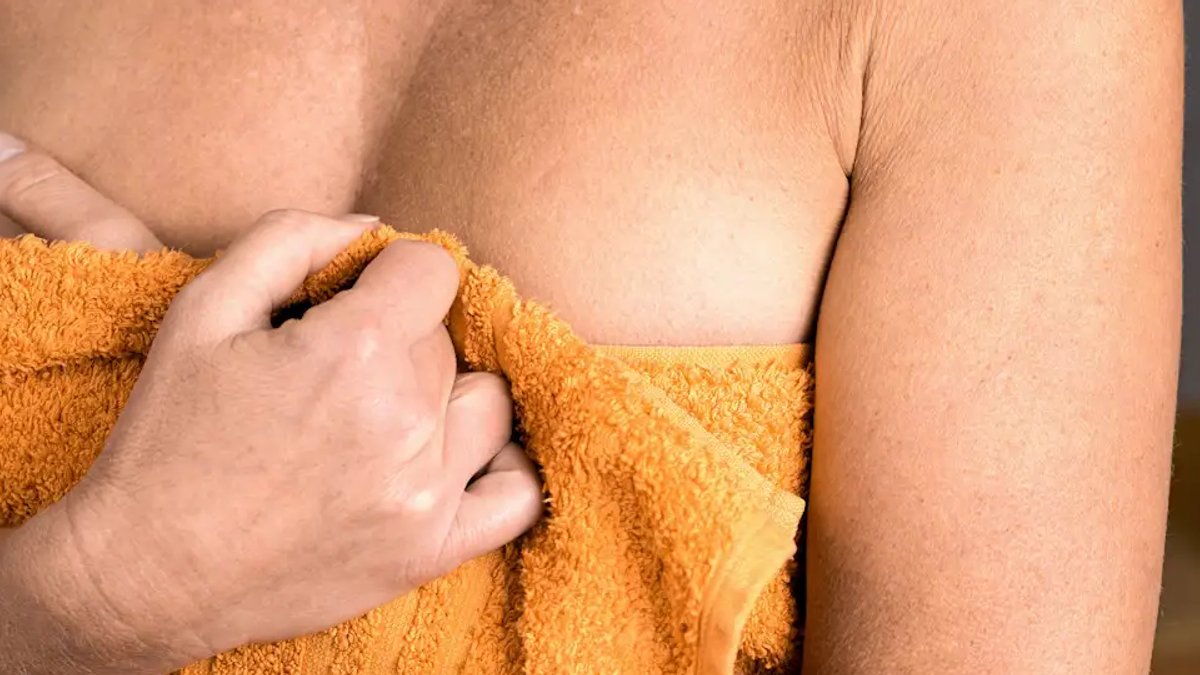
Most breast bruises stem from physical trauma, and unless they persist beyond two weeks, they’re not necessarily linked to breast cancer. A breast hematoma, however, involves deeper bleeding beneath the skin, forming a swollen, firm, and often painful lump that heals far more slowly than a standard bruise.
Medical care becomes necessary when a bruised or reddened area gradually worsens, fails to fade or shift hue, or when a mass remains unchanging, as these signs warrant professional assessment. Performing routine self-examinations helps individuals recognize their baseline condition, enabling early detection of abnormalities.
Such examinations should assess for potential masses and variations in tissue density, while also monitoring alterations in coloration and surface texture, which may manifest as rashes, indentations, or discolorations. It’s important to note that masses are not inherently cancerous—most are benign, particularly among younger individuals—and visible bruising alone does not confirm malignancy, especially if it diminishes within a few weeks.
Breast Hematoma
A bruise, also called a contusion, is produced when some type of injury causes the small veins and capillaries under the skin to break. With the chest area, that might happen from falling on the ground after stumbling, for example. A hematoma happens when blood pools outside the blood vessel, creating more swelling along the way.
Consequently, hematomas may present with both a palpable mass and a darkened, tender area resembling a bruise. Unlike superficial bruises, hematomas protrude above the skin surface and feel firm to the touch. Dr. Richard Reitherman, MD, PhD, medical director of breast imaging at MemorialCare Breast Center at Orange Coast Medical Center in Fountain Valley, CA, explains that hematomas typically stem from significant trauma.
For example, vehicular accidents causing seatbelt impact can lead to chest hematomas, though minor injuries like biopsies or surgical procedures may also cause them. Research published in In Vivo identifies hematoma as the most common complication following vacuum-assisted breast biopsy, affecting 13% of patients undergoing the procedure.
Bruises and hematomas often differ in how long they stick around, Dr. Reitherman adds. Bruises often take between five and 10 days to heal, but hematomas take longer, especially if there’s a particularly large lump. Some hematomas can take months to heal, says Dr. Reitherman, and may require some medical intervention like draining the blood from the area if the pain and swelling are significant or affect everyday activities.
Related Post: Gynecologic Oncologist Shares Lessons After Breast Cancer Diagnosis
Risk Factors and Diagnosis
Trauma to the chest, especially severe injury, poses the primary risk for developing hematomas. Additional contributing factors include advanced age, deficiencies in vitamins C or K, hepatic dysfunction, low platelet counts, viral infections, coagulation disorders, alcohol dependency, and hematologic malignancies such as leukemia, lymphoma, or myeloma, according to commentary in American Family Physician.
Hematomas are diagnosed through a clinical exam, but if the hematoma is deeper inside the body, for example, in the breast closer to the chest muscles than the skin, Janie Grumley, M.D., a breast surgical oncologist and director of the Margie Petersen Breast Center at Providence Saint John’s Cancer Institute in Santa Monica, CA, notes that an ultrasound may be used to determine the extent of the trauma. She also notes that in rare cases, bruising or a hematoma that doesn’t fade or change color may also be a sign of inflammatory breast cancer (IBC).
Inflammatory breast cancer may cause local tenderness, though many patients experience no discomfort at all, presenting only with persistent redness, according to Dr. Grumley. Distinguishing between hematoma and IBC involves tracking progression: hematomas initially appear dramatic but gradually improve, whereas IBC often begins subtly, as a small bump resembling an insect bite, and progressively deteriorates.
Dr. Sharon Rosenbaum Smith, MD, associate chief of breast surgery at Lenox Hill Hospital in New York City, advises that post-hematoma resolution, any lingering lump should undergo clinical review. Although hematomas usually resolve over time without intervention, their presence should never raise future breast cancer risk. However, scarring from healed hematomas might mimic tumor characteristics due to firmness and defined boundaries, warranting inclusion in personal health records as normal anatomical variance.
In the case of a hematoma, Dr. Reitherman notes that it may take a few days for one to appear on the skin surface after a trauma to the area, and pain and swelling can be delayed as well. Hematomas can be deeper in the body than a bruise, which is why they may take longer to heal, and in some cases, may require medical intervention to drain the blood from the area.
According to Dr. Grumley, inflammatory breast cancer typically occurs in women younger than 40, but the average age at diagnosis is still around 59, and it makes up about 1% to 5% of all breast cancers. With IBC, there can also be tenderness in the affected area, but not always, and one way to tell whether you’re dealing with a hematoma or IBC is whether the affected area is getting worse or better.
A study in the journal Cureus notes that there has only been one very rare type of breast cancer linked to a hematoma in a case study, papillary carcinoma, comprising only 0.5% of all breast cancers. In the case study, an older woman who had breast swelling after a fall was found to have breast cancer after the hematoma didn’t resolve.